
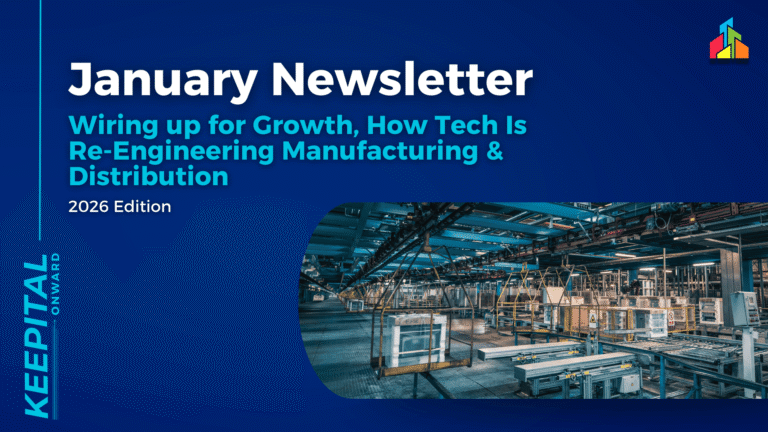
Manufacturing and distribution are entering a transformative era. Automation, robotics, and artificial intelligence (AI) are reshaping workflows, reducing costs, and enabling faster decision-making. In 2025, industry leaders identified AI, cybersecurity, and business intelligence (BI) as the technologies with the greatest impact on competitiveness. These tools don’t just streamline processes, they empower companies to anticipate demand, optimize inventory, and strengthen customer relationships.
One of the most visible shifts is the growing use of automation and robotics. Tasks that were once repetitive and prone to human error, such as assembly line operations or warehouse picking, are increasingly handled by machines, freeing up human workers for higher-value activities. Alongside this, the rise of the Industrial Internet of Things (IIoT) has introduced connected sensors that provide real-time visibility into production and supply chains. This level of transparency allows businesses to respond quickly to disruptions, whether they stem from logistics bottlenecks or sudden changes in demand.
Data-driven decision-making is also becoming central to competitiveness. Advanced analytics and business intelligence tools enable firms to forecast demand more accurately, optimize distribution routes, and identify inefficiencies that would otherwise remain hidden. Yet as IT and operational technology converge, cybersecurity has emerged as a critical concern. Protecting digital infrastructure is no longer optional; it is essential to avoid costly breaches that could paralyze operations.
For small and medium-sized enterprises, technology adoption can feel daunting. However, digital tools are increasingly leveling the playing field. SMEs that embrace automation and predictive analytics gain the ability to reduce operational costs, enhance visibility in regional and global supply chains, and build resilience against external shocks ranging from geopolitical shifts to climate-related disruptions.
It’s important to remember that technology adoption is not just about machines and data. It requires cultural change such as retraining staff, fostering digital literacy, and encouraging collaboration between IT and operations teams. Leaders must balance innovation with empathy, ensuring employees see technology as an enabler rather than a threat.
Future-proof your business today. Sign up for our free directory today and make sure customers can always find you.